
Being as isolated as we are here in Tanzania, that is, no television, and even more importantly, no MSNBC, can be a bit disorienting at times. It’s so easy to come over here and completely forget all the troubles of the world, focusing only on what is right in front of you. The rest of the world can seem so very distant when you wake up to the sounds of the morning dove and other local birds and realize that your local commute to work will be a five-minute walk to our outdoor covered clinic. Sure, the economic situation here is not rosy by any means, and it’s often difficult for patients to afford their medications here as it is at home, but people are happy and lead their lives as they have done for many years before we were here. There is a completely different pace to life and there are certainly benefits that come with that. People are happy and pleasant and that is worth embracing.

At the end of morning report, we learned from Pete that it was International Women’s Day, a day to thank all those women who have made a difference in your life as well as in the lives of others. Here at FAME, there are women who work every day in every capacity to improve the lives of those we see who have come to FAME to seek help. The necessities of life that we all take for granted at home, such as food, healthcare, safety, or numerous other things, are not so readily available to everyone here in East Africa, and mothers here will often travel days by foot to bring their children to a health clinic where they may receive care. FAME’s catchment area of 2.9 million occupies much of Northern Tanzania and it is not uncommon for patients to travel large distances to reach us to receive much needed care.

For myself, I could not help but think of my mother on this International Women’s Day, for it is because of her that I am here in the first place. I’ve previously written an homage to her on this site, but on this day, I cannot help but write again about the significance she held in forming those things that were most important to me. She was an adventurous woman who, from my earliest memories, sought to take the path less traveled so as to explore what was less familiar, and at times, less comfortable. Along with my younger brother, the three of us traveled to remote places throughout, Southern California to camp and explore those natural areas that others knew little about – Death Valley, the Anza Borrego Desert, Vasquez Rocks, Julian, Mammoth Lakes, the Owen’s Valley, and others. With sleeping bags, a camp stove, cans of beans, and our Plymouth station wagon, we would ply the back roads in search of campgrounds or tiny hotels in which to spend the night.
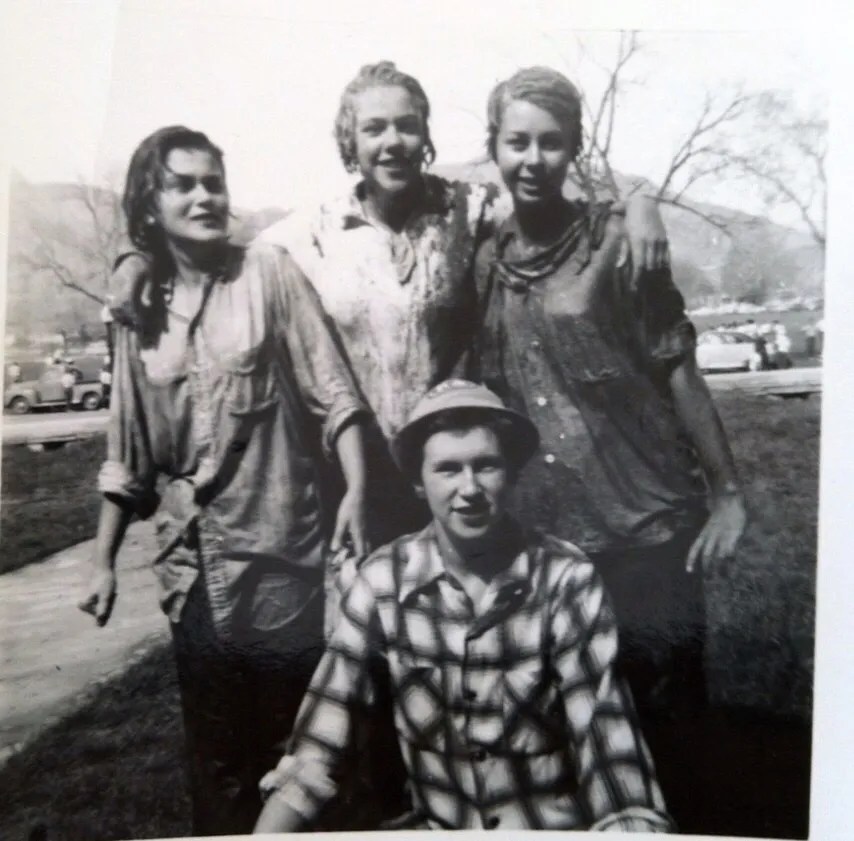
From that sense of adventure, it was not surprising that my heroes growing up were not sports figures or movie stars, but rather explorers and anthropologists who traveled the world in search of the unknown. I had always had a keen interest in Africa and animals, again having stemmed from her interests, and the fact that we had a menagerie at home which eventually turned into a pet shop that we ran for several years of my adolescence. The dream of traveling to these remote lands, something clearly instilled by my mother, was all that existed for many years, though my brother and I did get to travel to Greece during college one summer while backpacking through Europe on our Eurail passes. Of course, my mother was also responsible for that as it was her gift to us from the sale of our childhood home.
The decision to travel to Tanzania on safari with my children in 2009, though most immediately was the result of Anna’s interest in wildlife, was really the outcome of what my mother had instilled in me and had then been transferred to Anna. Coming back to Africa after that first trip in 2009, though, was my mother’s influence and I very much recall the moment that I realized just how much she had been responsible for that trajectory. I was staying in Gitamilanda in the Lake Eyasi region during one of our mobile clinics. It had been an incredibly hot and sticky night and, after waking long before sunrise, I had decided to take a walk into the bush on my own (there are few predators in that region).
Standing there, alone, with the entire expanse of the Great Rift Valley looming before me and the realization that early man had also walked this ground in the distant past, my thoughts were immediately drawn to my mother and the role she had played in my having arrived at that point in time. I immediately phoned her to tell her how much I loved her and how much she meant to me. Though I am not entirely sure how much she understood of my phone call as she was already in the early stages of dementia, I am certain that she knew it was me and that I was in Africa. In less than a year, she would be gone, and it occurred while I was here at FAME doing what I continue to do to this day. Knowing that we shared so much in life, this work I do is as much her legacy as it is mine. She is greatly missed.


Otherwise, our day was a bit less hectic with fewer patients than days earlier in the week. Of the patients seen, there was a young woman who we had been treating for seizures for the last few years with incomplete response despite several medications whose brother brought in a video of her typical episodes today for the first time. With the video and a more detailed description of her episodes, we were very comfortable now with a diagnosis of PNEE, or psychogenic non-epileptic events. These are episodes, that used to be called pseudoseizures, actually fall under the heading of conversion disorder, or somatic symptom disorder, and are treated not with anti-seizure medications, but rather with psychotherapy and selective-serotonin reuptake inhibitors.


Though patients with PNEE can also have co-existing epilepsy, meaning the diagnoses are not mutually exclusive, but that situation is not as common as it was once believed. We see PNEE very often in the US, and I suspect that it is seen with an equal frequency here in Tanzania based on my clinical observation over the last 14 years. Not having access to EEG here certainly makes the evaluation and diagnosis a bit more challenging, but ultimately it is a clinical diagnosis. As for the patient we were seeing today, they received the explanation that is normally given to patients which is that what they are having is very real to them, but is treated with different medications, and that the episodes will eventually resolve on their own. The patient was started on fluoxetine (Prozac) and asked to return in six months to see us again.


Another interesting patient we saw today, and were thankful that Marissa Anto, our pediatric neurology attending, arrived today when she did, was a complicated two-year-old child who had suffered what sounded like an encephalitis previously, from which they had recovered, but had never regained any of their developmental milestones and, overall, seemed to be regressing somewhat. There was very little to go on, unfortunately, but on the laboratory screen, the child’s ESR, or sed rate, was elevated, raising the concern that there could possibly be some type of an inflammatory or auto-immune process going on. With nothing else to offer the child, it was decided to give them pulse dose steroids. We had brought Depo-Medrol to use for our headache nerve blocks and this worked perfectly well for an IM injection of medication for this child.


For the evening, I had made arrangements to visit with Daniel Tewa, a close friend who I was originally introduced to in 2009 when volunteering at a local school with my children. Daniel was a village elder who spent time painting with us and had also invited us to his home to hear about the Iraqw culture. Upon returning in 2010, I had contacted Daniel, having dinner at his home, and meeting the rest of his family. I have continued to visit with Daniel on every trip since 2010, and he has graciously accommodated every group of residents that have come to FAME since 2013. Daniel is a self-taught historian of not only the Iraqw tribe, but also of the entire world, whether it be geography or current events, and every visit to his home is a time to learn something new. I have valued each and every time that I have sat down with Daniel, and his insights into the history of Tanzania, which has been quite colorful, have been priceless.


Besides having my neurology team come visit, though, Daniel has served to provide the history of the Iraqw culture to safari goers and other visitors as well as academicians with an interest in the history of this country. In 1993, after continually telling his children that he had grown up in a traditional Iraqw underground house and them thinking him crazy, he finally set out to building one. It took several years, though, when completed, he had built a traditional underground home that the Iraqw had lived in for many years as the main purpose was to protect their animals from the Maasai, whose believe was that all livestock were God’s gift to the Maasai, and they were merely taking back what was rightfully theirs rather than stealing. The home served to protect their livestock and themselves from the Maasai, who they were at odds with (in reality, war) until 1986, when a truce was finally signed.


Sitting with Daniel and drinking his wonderful African coffee (coffee boiled with fresh milk) is a unique experience that is hard to describe. Regardless of the fact that I have visited with him on more than 25 occasions, I have always learned something new about Tanzania and its history. He has twelve children (11 of his own and one adopted after their mother died in childbirth) and I have met most of them over the years. Despite the fact that Daniel only finished primary school and would be the first to remind you of this, nearly all his children have graduated college and are working throughout the country in various professions. From having grown up in an underground house long before there was a Tanzania, Daniel has persevered to become the treasure that he is, and we have been lucky enough to have experienced him many times over.


