Friday, October 10 – It’s off to the Serengeti again…

Standard
Looking out over the Malanja Depression to the Serengeti beyond


As I’ve mentioned before, the two three-week rotations for the residents include the same extracurricular activities for each group – a day at Ngorongoro Crater, visits to Daniel Tewa, Phillipo (the coffee farm), and Teddy, a dinner or two out at one of the fancy lodges here in Karatu, and finally, three-days and two-nights to the Serengeti, which is probably the highlight of their trip, though spending clinic days with the amazing FAME staff and the wonderful people of Tanzania is by far the most life changing. Today, we would be heading off once again for our trip to the Serengeti with a much smaller group than last time – only three of us, Leah, LJ, and me – would be in the vehicle in addition to our guide, Freddie. Vitalis, who I have been to the Serengeti with innumerable times, would be driving Natalie and her family, who were planning a more extended trip to the Crater and the Serengeti, so he would be taking their group. We would also be leaving Turtle, my trusty stretch Land Rover, home and taking a much newer and luxurious Land Cruiser, which actually has air conditioning, a true benefit on these incredibly dusty roads. In Turtle, you have to constantly slide the windows closed every time there is a passing vehicle, which is quite often during the high season. In the end, though, I would miss the smoother ride and greater security of driving a Land Rover.

Professor Masaki giving us the story of Oldupai Gorge from the overlook
Leah standing next to Lucy, found in 1974 by Donald Johansen, and dating back to 3.2 million years ago

The drive to the Serengeti from Karatu takes you through the Lodoare Gate for the Crater, around the rim of the Crater, and then, rather than descending down into the world’s largest complete caldera, you continue on across the eastern border of Serengeti National Park until arriving at Naabi Hill, which is the southern entry gate to the park. But first, we would be stopping once again at Oldupai Gorge, the single most important archeological site in the world for the history of mankind. My childhood was spent reading about Louis Leakey and his wife, Mary, who had spent decades at Oldupai looking for ancient hominins (our ancestors which used to be referred to as hominids when I was in school), which they finally found in 1959 with the discovery of Zinjanthropus boisei, that has now been reclassified to Paranthropus boisei after a brief classification as Australopithecus. Hopefully, that’s not too confusing to everyone, though I sometimes think that it was meant to be. Oldupai Gorge, originally discovered in 1911 by a German neurologist researching tsetse flies and trypanosomiasis, or sleeping sickness, had misspelled the name as “Olduvai,” which it became known as in the Western World despite the fact that it was named after the Maasai word for the sisal plant that grows everywhere in this region.

Shifting Sands

Regardless of the misspelled name, after having seen the recovered animal fossils that were then in Germany, Louis Leakey decided to go there in 1931 (the British now controlled East Africa after having defeated the Germans in WWI) to begin his excavations that lasted for twenty-eight years before finally unearthing a hominin in 1959 (Zinjanthropus actually found by Mary Leakey). The pair would continue working at the Gorge for many years – Louis until he died in 1972, with Mary continuing to actively work at Oldupai and surrounding areas through the 1980’s, finally passing away in 1996. Mary’s discoveries at nearby Laetoli – hominin footprints dated at 3.6 million years ago as well as other hominin fossils that dated as far back as 3.75 million years – were equally significant finds to Zinjanthropus, further cementing her place in history.


After a short talk by a good friend of mine, sitting at the overlook with a wonderful view of the main portion of Oldupai Gorge, we walked to the nearby Oldupai Gorge museum to spend time among their collection of incredible fossils and replicas. We had been told at the entrance gate that the only way to drive to Shifting Sands would be to take a ranger with us and then drive all the way back to the visitor center which would be an extra half hour of driving. When I told Masaki (my good friend who works at Oldupai) about this, he gave us permission to drive there on our own (which we’ve done every visit for the last ten years) and then on to the Serengeti directly on the back road without an escort. This was huge as it meant we could bypass most of the horribly rocky, bumpy, and dusty main road to the Serengeti and we could instead travel almost cross country (essentially following tire tracks) on the opposite side of the gorge from the main road and 99.99% of the other vehicles traveling to the Serengeti.


Shifting sands is the very unique huge pile of black magnetized volcanic sand that had been ejected from Ol’ Doinyo Lengai (Mountain of God to the Maasai), one of the last active volcanoes in the region, over 100,000 years ago and is moving slowly across the plain to the west by about 3-5 meters per year. The mound of sand, which is easily spotted from a far distance across the plain, is sacred to the Maasai, as is Ol’ Doinyo Lengai, who come to make offerings there if times are troubled. Standing on the downwind, naturally crescent shaped side of the mound, you can watch the waves of sand blowing across the surface without a single loss of a grain as the mound moves slowly yet imperceptibly across the plain, swallowing anything that remains in its path.

Leah enjoying the lions

We made it to the Naabi Gate around lunchtime and thankfully found a table as it was once again incredibly crowded despite the fact the high season was really over. There is an art to when you check in to the Serengeti as the permit is for 24 periods from the time you enter – entering at 2:00 pm means that we have to be out by the same time on Sunday, so you must plan accordingly. It seems that we’re always running to make it through either one gate or another before it closes, such as the Lodoare Gate to the NCA in which case you spend the night in the Conservation Area, or the Naabi Gate, in which case you pay for an entire extra day.

Mama leopard
“Baby” leopard

Once back on the road, we headed directly towards the Gol Kopjes as there were often two of the big cats, lions and cheetahs, in this area, and we were anything but disappointed in what we found. At one of the Kopjes, we found a large group of lions – 19 in all, that were comprised of five adult females and the rest were various ages, though no adolescents. The young ones were nursing or lying about playing, completely ignoring the four vehicles that were there watching them, which is usually the case. Unless you literally drive up to close to one of them, typically a female, they don’t react whatsoever to your presence, probably both a fact that they are habituated to vehicles, but also because they really have no natural predators here. Even among the cats, lions are the king as they can easily kill any of the others – leopard or cheetah, neither of which travels in numbers like the lions. Sure, a pack of hyenas might be able take on a single cornered lion, but that situation is unlikely.


Heading back in the direction of Seronera, we ran across a number of vehicles which is always a good sign that there may be something to see. Given the time and where everyone was looking, we thought for sure there would be a leopard in one of the distant trees (in the Serengeti, you must remain on the roads, as minimal as they may be at times) but really couldn’t make out anything with our telephone lenses or our binoculars. We were about to call it quits when someone in one of the other vehicles who had been there longer indicated that the leopard was actually in the grass and, even more exciting, there were two of them. Leopards are solitary animals, meeting only to mate, and when you see more than one together, it is always a mother with her cub or cubs. Leopard cubs stay will stay with their mother for approximately two years (slightly less for female cubs) to learn all the essentials of hunting and survival. It can be tough to find leopards in the park, and there have been times that we’ve left without finding a single one.

Leah walking to her tent
Glamping at Dancing Duma

After finding the leopards, it was time to make our way to camp, though we were still quite a distance as we had tracked somewhat north in our quest. This meant that we weren’t going to arrive back to camp until well after sunset and would be driving these roads in the dark as the moon hadn’t risen yet. Game drives in the dark are not allowed in the Serengeti and they even frown from driving at night unless it’s a necessity. Thankfully, it wasn’t too long before we saw the lights of Dancing Duma and knew that we could relax a bit.

Thursday, October 9 – We’re back at FAME for the day, and dinner at the Manor Lodge….

Standard

It had been a very successful series of neurology mobile clinics given the number of patients seen over the last three days, much to the credit of Africanus at Rift Valley Children’s Village, and the partnership we have with Food For His Children that brought patients in to see us at Basodawish. It was now time to resume our neuro clinic at FAME for today and all of next week for tomorrow we would be heading off to the Serengeti for a three-day, two-night adventure. As it was Thursday, though, there would be an educational lecture first, and we had been asked to give today’s talk.

LJ presenting her lecture on dizziness to the FAME staff

LJ, who just happens to be our new dizziness guru at Penn after six months commuting to Johns Hopkins to work with the world’s expert on this subject, David Zee, agreed to cover this subject for the clinical staff at here at FAME. Though the dizzy patient is perhaps the one most often dreaded by neurologists, LJ thrives in this arena and has found a true niche in which she can not only make a difference for the patients but can also teach others how to properly evaluate these patients. Defining exactly what the patient is complaining of, and its exact nature is absolutely crucial before you can begin to examine the patient and even consider potential etiologies.

Ivone, Annie, Natalie, and Leah all enjoying a precious baby
Leah examining the same precious little baby

One patient who came back to see us today was the gentleman we had previously seen with what appeared to be catatonia, but he was not frankly psychotic, nor did he appear to have schizophrenia as he was too old and functional for that. He had been placed on a benzodiazepine trial (giving a short course of a valium like medication that paradoxically makes the patient more awake and interactive rather than sleepy) to see if he would improve as well as an SSRI antidepressant as that was his most likely underlying psychiatric issue and had led to his catatonia. The family reported that he had responded to the benzo trial by being more interactive and alert, but after the benzos were stopped, he had again developed his psychomotor slowing – they wanted to know whether we could put him back on the benzodiazepines, though that really wasn’t an option, nor was it a long term solution, and it was far too early for the SSRI antidepressant to have kicked in fully. We encouraged them to stay the course with the antidepressant medication, and he could come back to see Dr. Annie in follow up in a month or two as we would have a much better idea at that point of how it was going to work and whether he needed a higher dose.

Novati and LJ evaluating a patient

LJ evaluated a young patient who seemed to have hemifacial spasm – a disorder in which one half of the face begins to involuntarily twitch and can be very uncomfortable as well as impair function. It is believed to occur as a result of irritation of the facial nerve, often by a blood vessel that is in contact with the nerve and causes this mostly pure motor nerve to discharge frequently causing the spasm. It is perhaps the motor equivalent of another disorder, trigeminal neuralgia, that involves the trigeminal nerve, which is a pure sensory nerve of the face, leading to severe and disabling incredibly brief painful sensations that shoot through usually one or two divisions of the facial nerve distribution and is disabling. Trigeminal neuralgia, or tic douloureux as it used to be known, is one of two pains in neurology that are considered suicidal – the other being cluster headache.

Ivone and Leah evaluating a patient

The treatment for hemifacial spasm is essentially the same as for trigeminal neuralgia, being medications that make neurons less likely to fire spontaneously, such as when irritated, which are typically antiseizure medications, carbamazepine being the one most commonly used. The patient was placed on carbamazepine and instructed to return in one to two months to see Dr. Annie in follow up.

Zai, Ruhura, and Natalie evaluating a patient

Natalie evaluated a young girl who she had seen briefly in the hospital several days prior for abnormal movements that were unlikely to be epileptic and were more concerning for some type of dyskinesia or dystonia. It turned out that her younger brother also had very similar movements, so they had both been asked to come to clinic to be seen by us. Both the children were otherwise normal developmentally and had normal neurological examinations, though they both described abnormal stiffening of their muscles, often precipitated by stress, that had been present since they were very young, making it very unlikely that this was a psychogenic problem. Based on the fact that both siblings had it (they also later described similar symptoms in an aunt), it was most likely a disorder with an autosomal dominant inheritance pattern and given their description of the episodes and the triggers, it was most likely paroxysmal nonkenisigenic dyskinesia, or PNKD. There is also a similar hereditary condition of paroxysmal kenisigenic dyskinesia, or PKD, in which the abnormal movements are triggered by sudden movements such as standing up. There is no cure for either of these disorders, though medications can help reduce the frequency of the episodes, and sodium channel blockers, such as carbamazepine or lamotrigine, are often used to reduce symptoms. As the older sibling was more significant affected, we opted to treat her with lamotrigine initially but would follow her and consider carbamazepine in the future if she was not responding to the initial medication.

Auditioning for “The Real Women of Manor Lodge” series on Netflix

We had decided to go out for a nice dinner at the Manor Lodge as it was Natalie’s last day at FAME – her husband and parents would be arriving tomorrow and they would all be traveling to the Crater and the Serengeti together for five days while we would be heading to the Serengeti first, but only for two nights so we would be missing running into each other by a day. The Manor Lodge sits high above Karatu and borders the Ngorongoro Conservation Area, so closely, in fact, that you have to pass through a short easement in the NCA to get to their gates. We have seen elephants and buffalo on the road before as we’ve passed through on our way to dinner which is just a little bonus. The Manor Lodge, which is operated by Elewana, a South African company, is one of the higher end lodges in Karatu and has always offered us a discount since we are working at FAME and helping the community. They have incredibly gorgeous grounds with views to equal, and their large cottages are designed to make one feel as though you were in the wine district of South Africa. The large Manor House is impeccably furnished with a lovely dining room, a large piano bar, and a downstairs media room for watching football matches.

The view west at the Manor Lodge

A cottage at the Manor Lodge

We always arrive before sunset as the view to the west is fantastic and unless it’s horrible overcast, we’ve not been disappointed. Having drinks on their veranda is always special and tonight’s weather was perfect – there was a slight chill as the sun went down and the several nearby small chimineas were quickly lit to provide a hint of warmth before dinner. We were eventually called inside to a table that had more silverware than I think I have ever seen in East Africa (perhaps the Ngorongoro Crater Lodge that we stayed at two years ago may have equaled this). Dinner is a perfect five-course affair with smaller portions that are much preferred, and each course was amazing. LJ’s vegetarian dinner was equally delightful by report. The dining room was pretty much full, so we were very appreciative they were willing to accommodate us for the evening, and we spent two hours dining which meant that we weren’t rushed at all.

Another audition? On the veranda by the light of the chiminea

It was late when we started back down to Karatu, passing once again through the NCA easement, though we didn’t encounter any wildlife this time. We made a quick stop at the Golden Sparrow for a drink on the way home and arrived back home late with plans for three of us to leave early in the morning for the Serengeti and for Natalie to meet her family around lunchtime.

Wednesday, October 8 – Our second day at Rift Valley Children’s Village….

Standard
The Mushroom Cafe where Annie picks up our morning snacks for the drive

It had rained last night so we knew that the roads would be less dusty, though the African Massage Road still had its charm as we left the tarmac. These roads become quite miserable and nearly impassable in the heavy rains and more like a Slip ‘n Slide (reference to an old Wham-O toy that was sold when I was a child and is actually still available) – I’ve always made it there and back each and every time, though I will admit not without some tense moments at times. The Land Rovers are a perfect vehicle for the trip as they rarely become stuck in the mud with full-time all-wheel drive and a coil spring suspension as opposed the leaf spring suspension on the Land Cruiser. Driving up and down through the gulleys, it is essential to have the vehicle in the low gear range for the transfer case and to never, ever touch the brakes, which is almost guaranteed to have you sliding downhill very quickly. All that being said, though, the incredibly talented drivers who come and go from RVCV multiple times a day to transport people and other chores, do so in small, two-wheel drive vans multiple times a day and rarely have an issue.

Breakfast at RVCV
Many patients waiting to be seen at the RVCV clinic
Ivone, Leah, and Annie staffing a patient with me at RVCV

We were greeted by the RVCV staff as we arrived in front of the administration building, and while walking to the clinic had to pass by the kitchen and dining building – I heard the offer, “have you had breakfast yet?” and, as expected, the entire team immediately detoured to see what was for breakfast. I knew that we had a ton of patients waiting for us, so continued on to the clinic while everyone else decided the enjoy the delicious French toast (I only knew it was delicious based on what I was told and the reputation of the chefs here) they were being offered. There were, in fact, quite a few patients sitting out in front of the clinic waiting to see us, though today all were on the porch under the roof as the sky continued to threaten precipitation. As the group had wanted to get a tour of the village and do some shopping in the duka (shop) there, I was getting a bit anxious as the entire team remained at breakfast a bit longer than I was comfortable with, though I suspect in reality they hadn’t been there very long, and soon arrived back ready to begin the day.

Ruhura, Patrick, and Natalie evaluating a patient
Zai, Novati, and LJ evaluating a patient
Annie, Ivone, and Leah evaluating a patient

There were, of course, many patients as this clinic is very different from the other mobile clinics we provide in the district. Here, Africanus actively manages all the patients who come to see him from the Oldeani region and then refers them us for evaluation or continued care if needed. Many of these patients we have followed for years, some with epilepsy and others with development delay or static encephalopathy, and have come to see us every six months for medication refills or merely to follow up with us for recommendation of physical therapy and such

Zuhura, Natalie, and Patrick evaluating a pateitn
Zai and LJ evaluating a patient
Annie, Ivone, and Leah evaluating a young woman in clinic

Once everyone split up into their respective teams, we began to see patients in earnest, and it wasn’t long before everything was humming like a well-oiled machine.  We moved through the patient list rather quickly, and by lunchtime, the bulk of the patients had been seen and there would be a far smaller number for us to get through in the afternoon. Lunch was again an incredibly delicious mix of Tanzanian and Western foods prepared by the cooks at RVCV and which was enjoyed by all. As I had mentioned previously, the lunches here are something that everyone looks forward to each trip and we have never been disappointed. After lunch, it was a visit to the duka for the group.

Grounds of the Children’s Village on a very overcast day
The kindergarten at RVCV

We were finished with clinic at a decent time, but there was still the tour of the village for everyone that had to be completed, as well as the visit to the RVCV duka, so I actually sent the other car with all the FAME staff on its way home since they wouldn’t be taking the tour nor buying anything in the shop, and there was no reason to delay them from getting back to Karatu on time if we could help it. All the clinical staff – our interpreters, Dr. Annie, the neuro team, and Dr. Ivone – took off with one of the RVCV volunteers to look at one of the houses and to hear the amazing story of Mama India’s village and the children who grow up here as a family, now numbering over 110.

Another view of the RVCV campus

We were due for a visit to Phillipo’s house for coffee as none of the current team had been there this trip and everyone was in dire need of this amazing coffee to bring home as gifts. I had found Phillipo’s home while on a walk only a few years ago, only to discover that my good friend Leonard had been buying his coffee there for years. It is now a mandatory stop for each group that come as it’s a way to see a small, family-owned coffee plantation and enjoy learning how coffee is processed to reach your kitchen. Phillipo’s father had originally grown maize on their five acres, though they were constantly fighting off the elephants in the area from ruining their fields of maize. At some point, Phillipo decided to switch to growing coffee as the animals don’t bother it and, as they say, the rest is history. He now grows and harvests coffee not only from his own 5 acres, but also one of his neighbor’s 5 acres and is also planning to acquire whatever land become available for sale in the community to enlarge his own acreage.

The Maasai market from yesterday
Maasai market from yesterday
You can find anything at the Maasai Market

After the coffee beans have been harvested, they are put through the first process of removing the outer shell, after which they are put into a large cistern and fermented for several days. They are then dried after which they are pounded to remove the innermost shell and then they are ready for roasting. This is accomplished by placing 5 kg of beans into a canister that is then rotated manually for 45 minutes to produce a medium roast coffee. They start smoking after about thirty minutes, but you have to keep turning them constantly, so they don’t burn. When they’re finished roasting, the next step is to put them into a sifter (a screen fine enough for the beans not to fall through, but to allow the minimal remnants of the burnt shells to fall through) to remove any remaining debris, and to allow the beans to cool for about 15 minutes. At that point, they’re ready to bag or to grind and brew.

Teddy’s shop from yesterday
Patrick and me sitting outside of Teddy’s shop yesterday

I’ve had plenty of photos of little Eliza, Phillipo’s 8-year-old daughter, who I’ve watched grow up and found it harder each year to put her on my shoulders (or perhaps it’s the combination of both of us getting older). We ended buying lots of coffee from them, all to bring home as gifts. Next to the Phillipo’s is the wood carver, Mbuga, and Athumani, the artist. I mentioned maybe stopping in for a short visit to shop, only to find that everyone was interested in spending lots of time there looking at their art and ebony carvings. We were in no rush, though, as it was just a matter of heading home for dinner, and that could happen at any time. Tomorrow would be Patrick’s last day, and he was leaving at around 10:00 am, so it was important that we get the up-to-date database from him as well as a primer on loading the data considering he had been doing it up until now.

Tuesday, October 7 – A visit to everyone’s happy place…but first, the African Massage Road….

Standard

Patients waiting for us to begin clinic

Our second mobile of the week would be to the Rift Valley Children’s Village (RVCV) in Oldeani, about a 40-minute drive from FAME through some of the most picturesque scenery one could ever imagine, though also along a road infamously known as the “African massage road.” In the dry season, the route once leaving the tarmac is genuinely fun to drive as we travel initially along a ridge through planted fields of wheat and then descend steeply into two valleys having to use the low gears on my Land Rover going down and then up. In the rainy season, though, this can be one of the most treacherous journeys imaginable as all the lovely red clay turns into an incredibly slick muck that offers little hope of stopping when you touch your brakes and, hence, having the low range of the transfer case is entirely essential for safely navigating not only the steep inclines and declines, but also merely staying in the center of the road. Having been victim to such an incident well over ten years ago during the wet season, I continue to carry some of that PTSD with me whenever it begins to rain and I’m heading out into the bush. There is no question that having a Land Rover in this terrain makes a huge difference, and I have successfully traversed these roads in the rain many times since, but not without that apprehension in the background and a bit of a pit in my stomach.

Splitting up bites for breakfast on our way to RVCV

The Rift Valley Children’s Village, which began initially in 2003 as merely a home for street children that India Howell, or Mama India as she is affectionately referred to, and her business partner, Peter Mmassy, adopted (this was not an orphanage), became a reality in 2008 when it was moved to its present location in the Karatu district and the nearby village of Oldeani. Over the years, India and Peter have taken in and adopted well over 100 children that had either been orphaned or abandoned by their families or had simply run away from relatives who had neglected or abused them. What began over twenty years ago as home to these children, has created a family with each child having 100+ siblings. As the children become old enough to go to college, they may move some distance away but always have a home to return to during breaks from school or vacations.

In the administration building hallway with Peter and Africanus greeting us
Africanus introducing everyone to the RVCV clinic
Settling into my office – “Doctor in Charge”

The Tanzanian Children’s Fund (TCF), the larger organization that has funded the Children’s Village over the years, has many other facets that have benefited the larger community of Oldeani. The Rifty Economic Advancement Program (REAP) has empowered community members through microfinance and training that has allowed families to become financially independent rather than only working in the coffee fields as they had done for years. Their educational support, which had originally started with the primary school adjacent to the Children’s Village by hiring additional teachers and partnering with the local community, has now grown to include lunch programs and dormitories at the Oldeani Primary and Secondary Schools as well. Lastly, and perhaps most significantly from our perspective, the TCF provides free medical care not only to the children at the village, but also to the local community of Oldeani, through their health center and Africanus John, their excellent clinical officer, who we had worked with previously at FAME and were thrilled when he was hired by the TCF to lead their health care program and to subsequently develop the incredible clinic we were able to work in today.


Each morning for our mobile clinics, we meet Dr. Annie at the Mushroom Café which sits at the junction of the FAME road and the main tarmac. She is there with both Zai and Zuhura as well as some of the other FAME employees who live in town and it’s easier for them to meet us there rather than travel all the way up to FAME, only to immediately jump in a car and head back down the road. Annie buys us a breakfast of samosas, chapati, mandazi, and whatever other little bites she though we’d like. We ate on the road, first on the tarmac heading in the direction of the crater, then turning off onto the African Massage Road and our beautifully scenic path, all the while with everyone in the car bouncing up and down. We passed one vehicle which is always exciting considering the road is barely wide enough for a single vehicle at many places.


Our pharmacy

Driving through the gate onto the campus of Rift Valley Children’s Village, one experiences an immediate sense that all the world’s problems have been suddenly lifted from your shoulders and there is now hope in the world. This is a place of unquestioned and absolute safety for everyone who enters. In the past, we had always been greeted by Mama India or Peter at the administration building, though India now lives off campus in Karatu and currently is in the US for fundraising, so Peter’s happy face was there to meet us before we could even get out of the car. After introductions, we all made our way to their new health center adjacent to the village and primary school, at which point Africanus gave everyone a quick introduction to RVCV while I settled down in his office that he generously gives me for every visit so I can sit and work in between the others coming to staff their patients with me. Each of the three teams has their own examination room, including a pediatric room with happily painted walls that we put Leah in as she would be seeing the bulk of the pediatric cases, or alternatively, she would be seeing as few adults as humanly possible.

Meanwhile, back at FAME…a patient with a severe epidural hematoma and left temporal fractures

The support at the clinic is amazing as there is a separate room for triage and vital signs and the charts are separated into adult and pediatric piles. After the patients are seen, they step outside to a window where they are given their medications if they were prescribed any, and if they need to see our social worker for any reason, they will do so. It was a gorgeous day, so patients were sitting on benches and chairs on the grass in the open air in front of the clinic, waiting to be seen, or waiting for rides home on one of the many boda bodas waiting outside or in one of the staff cars that are always shuttling back and forth to Oldeani and Karatu.

A kuni boiler outside of one of the houses at RVCV
A scene of the local villager’s homes on our way home

Our lunch is perhaps one of the best meals we’re served during our time in Tanzania, save for the occasional dinners we have out at the lodges or at the Galleria, as it’s made by two chefs that do all the cooking for the volunteer and Western staff at the Village. Our interpreters, other than Zai, who is a vegetarian, ate separately with the Tanzanian TCF staff, which I had initially been taken aback by, but turned out to be their preference to eat more familiar food rather than what we were eating. Ironically, though, todays lunch was rice and beans, guacamole, chapati and fruit, a more typical Tanzanian meal one would have a very hard time finding. Regardless, it was incredibly delicious and very much appreciated by the entire team.

Butchers row in town
Natalie outside of Teddy’s shop on a research meeting call

In the end, we had seen 33 patients for the day which was a good number and very satisfying. We’d be coming back tomorrow for another pleasant day here and more great patients as Africanus does such a good job with his triaging beforehand. We left from RVCV at an excellent time as we had planned to visit Teddy before heading home. Additionally, as we were heading out of town with people walking everywhere, we had realized that it was Maasai Market Day, which is twice a month, and had decided that if we had time, we’d stop there as well. The Maasai Market in Karatu, which occurs twice a month, on the 7th and the 25th, is one of the largest in the region, and is a place where everyone local does their shopping. You can buy livestock, food, clothing, housewares, hemp rope, baskets, or pretty much anything one could possibly think of wanting. As we pulled into the huge open field where the market takes place, it was dusty and hectic with bijajis, boda bodas, trucks and safari vehicles coming and going. And then there were the pedestrians. I stayed in Turtle while everyone else got out to wander for a bit. Most of the clothing for sale is what is shipped over from the US in huge bales that are 4x4x6 feet and tightly bound until they’re put on the ground, usually on a large tarp, and the bindings are cut with all the clothes falling into a huge pile. If one is lucky, you can find a T-shirt from the loosing Superbowl football team, though searching for one would be like searching for a needle in a haystack, literally.

Annie holding Teddy’s youngest son, Adrian

Our next stop was to Teddy’s home to get fitted for clothing (not me, of course, as I have long ago found that I don’t like the feel of Kitenge). Teddy has been making clothes for my neurology team for the last several years and I have watched her move from a small shop in a rental building, to a small shop in her home, and now to a dedicated shop that she has built outside her home where she works on the clothing and also sells groceries to the neighborhood as so many others do here as well. There are small dukas on virtually every street corner here selling just about everything anyone can imagine selling. We finished up with Teddy and headed home for a quiet evening and readied ourselves for another ride on the African Massage Road tomorrow.

Monday, October 6 – It’s mobile clinic week again and we’re off to Basodawish…

Standard
The Health Center at Basodawish

Mobile clinics have been a part of FAME from its inception, though early on they were a much bigger production involving an entire team of physicians, nurses, lab personnel, and a host of support staff traveling for an entire week to a remote region along Lake Eyasi and providing general medical care to the Datoga and Hadzabe tribes who lived in that region. They were done monthly, that is when the roads were passable, and were funded through a grant by another non-profit, Malaria No More, that lasted until around 2011. At about the same time as those full-on expedition style mobile clinics were winding down, I began to travel to some of the smaller villages in the region, along with the help of a lovely social worker, Paula Gremley, and her associate, Amir Bakari Mwinjuma, to see neurology patients and to provide them medications, if necessary.

Myrtle and Turtle parked at the health clinic
One of our exam rooms – quite a change from dirt floors

What initially began as more of an impromptu visit by a small team from FAME with a single vehicle and with a single neurologist, me, has now morphed into what has become a major component of the neurology work we’re doing in Tanzania – a full team of neurologists, a social worker, interpreters, a nurse/pharmacist, one of our volunteer coordinator for any logistical issues that arise, and a FAME driver in two vehicles (I drive the second one). The clinics can be as far away as over an hour to reach, or sometimes shorter, though all require a full day of work to see the patients there, or at least to be available for the full day in case they show up. We don’t have a means of confirming the number of patients in advance, and even if we did, the situation could change at a moment’s notice with the weather, timing of planting or harvesting, or a host of other things that can interfere with their ability to travel to clinic and drop everything else in the process.


Over time, we have traveled to many villages, some of which have remained on our schedule, others that have not, and still others that we’ve found in need during our travels. One such village is Basodawish, a small village about 30 minutes away from FAME on the Endabash Road that heads south out of Karatu through lovely farming communities in a region that is almost entirely Iraqw. We first traveled here a few years ago and not only found the community to be in great need, but also extremely poor with difficulties to even cover the cost of transportation to be seen at FAME, only further necessitating our visits there. Though it’s unfortunate that we can only come every six months, it will still be of great help with many of the patients living there, but important to keep in mind that most will be obtaining their medications from the local “duka la dawa,” or pharmacy, meaning that medications such as levetiracetam for seizures are not always available in the smaller village pharmacies.


One other feature of Basodawish was that there was significant support in the community through an organization that FAME has partnered with, Food For His Children, a local non-profit, NGO focusing on the poorest of the poorest and helping to develop sustainable community empowerment through initially providing a goat along with support, reducing dependency, developing safe housing, and eventually businesses. When we had first arrived to Basodawish, the health center there had very little – we worked on dirt floors with little in the way of furniture, perhaps a plastic chair or two and makeshift tables. What they did have, though, was an interest in bettering themselves. With a donation to FAME, I was able to provide the necessary furniture for our clinic to function when we’re there – benches for the patients to wait on as well as desk chairs and tables. When we arrived on this visit, the dirt floors we had worked on previously were now tiled and the walls painted. The furniture I had provided was still present and ready for our use – it is these simple things that make it clear the community is trying to help themselves and will be successful.

Lunchtime
Lunch from the Golden Sparrow (Lindsay gave away her sausage and egg so they’re extra in this box)

We saw a good number of patients here, eighteen in all, which were mostly epilepsy, some of whom had significant developmental delays, though others which were idiopathic (no clear etiology). One unfortunate elderly woman had to be carried in by her family as she had a severely flexed cervical spine and a severe spastic quadriparesis – it was very clear that she had cervical spondylosis and compression of her spinal cord, though unfortunately, her extremity weakness had been present for over 9 years with very little in the way of changes for better or worse and her examination was entirely consistent with a cervical compression and myelopathy. Whether we sent her for imaging studies or not, she was not a candidate for surgery as it would not benefit her in any positive fashion.


As far as the epilepsy cases were concerned, it was very important here in Basodawish not to give in to the tendency of prescribing levetiracetam, which in the states is used most often as it is the least complicated thing to dose, but it is also significantly more expensive here in Tanzania, and, as I had mentioned before, is commonly not available in the smaller villages at their duka la dawa. There are several other very fine antiseizure medications we have here, namely carbamazepine and sodium valproate, that work well, are generally much less expensive, and are available in most of the local dukas. Even lamotrigine is less expensive to use than levetiracetam, though I will say that we’re thankful to have the latter medication for those patients where something needs to be loaded quickly, even though through an NG tube.

Dr. Ivone, Lea, and Zai evaluating a patient
The pharmacy area

An empty health center at the end of the day

With the number of patients in Basodawish (which was moderate) we were able to hit the road early enough to go into town to buy Kitenge cloth for Teddy to make some clothes for everyone, and had actually planned to visit her shop, though we bumped into her in town, only to discover that her car was on the fritz and being fixed by the fundi so she wouldn’t be available until tomorrow evening. The Kitenge cloth throughout both East, Central, and West Africa are all very similar and incredibly colorful in their designs that are predominantly abstract in nature, though on occasion you’ll find a more realistic design, mostly of African animals. The bolts of Kitenge come in several meter lengths, enough to make several pieces of clothing from each, and typically cost around 30,000 Tanzanian shillings, or approximately $12 USD.

Shopping for Kitenge

As we were in the central part of town and very close to the market we usually shop in for groceries, the team stopped by and grabbed a few things we were out of at home. I stayed in the vehicle while everyone was shopping as it’s the safest since we can’t lock Turtle and everyone’s things were still inside. We haven’t been able to lock it up since its had so many overhauls and revisions to the doors that it’s pretty much of a Frankenstein at this point, sharing parts from various other vehicles. I had parked on the side of the road and was sitting in the car when two policemen on a motorcycle suddenly appeared in front of me and were pointing to a “no parking” sign several car lengths in front of me that I had thought wasn’t referring to where I had parked. No such luck, though thankfully they merely asked me to move rather than ticketing me which would have been more consistent with my history driving in Tanzania. Several years ago, I had received three tickets in less than 24 hours, though have learned my lesson since then.

We returned home for dinner and a relaxing evening in the house. Our visit with Teddy was rescheduled for tomorrow evening and we would be spending the day at Rift Valley Children’s Village which is always one of the highlights of a visit to FAME.

Saturday & Sunday, October 4-5 – A bit of a hectic Saturday, but a great visit to the crater on Sunday….

Standard

We had planned for a half day in clinic as we did three weeks ago, and everything seemed to be going well until shortly after 8 am when I received a call from LJ, who was in transit from the US and was to be arriving at the Kilimanjaro International Airport (KIA) in only several hours. Though due to the vagaries of air travel these days, she had booked her flight from Doha to Nairobi and then on to KIA, rather than directly into KIA from Doha. Of course, this was entirely due to the cost of the flights (which we are all effectively paying for) and the confusing price structure the airlines use. In any event, her checked bag was apparently not checked through to her final destination, which it clearly should have been, and she was told that she would have to pick it up at baggage, but to do that, she would have to go through immigration in Nairobi which meant that she would have to buy a Kenya visa to pick up and recheck her bag. If all that sounds incredibly confusing, you’re not alone. LJ has spoken to both Qatar Airways (whom she had flown from Doha) and Precision Air (who was flying her momentarily to KIA) and they both claimed it was the other’s responsibility to figure out how to get her bag on her flight. In the end, I advised her to get on her flight and that we would begin working on how to retrieve her bag.

LJ’s captive baggage found on Monday at KIA

We had originally planned to go to lunch at Gibb’s Farm, though discovered that they were full due to the high season and couldn’t accommodate us. Plan B, though, was to head to the Galleria for some shopping and an early dinner as the day seemed to entirely get away from us and everyone was a bit frazzled over LJ’s baggage issue. Though she was entirely sleep deprived after her flights and hadn’t eaten since her first flight from Philly to Doha as they had run out of vegetarian meals on her second flight, she still seemed to be in good spirits and was able to hold out until our dinner with only some minor snacks.

We made it home in plenty of time to make our lunch for our game drive to Ngorongoro Crater on Sunday – we had invited our three interpreters to come with us as well and making lunch for the eight of us. We made two peanut butter and jelly sandwiches for each of us, two hard boiled eggs each, two-thirds of a cut up watermelon, and plenty of water. We had a target departure of 6:00 am and would be picking up Novati at the FAME gate and then Zai and Zuhura down at the intersection of the tarmac and the FAME road.


The following morning, we made our departure time within several minutes and picked up the others on our way. There were eight of us in the vehicle, which is pretty much the maximum for a game drive, and we were off for the Lodoare Gate into the Ngorongoro Conservation Area. Well before reaching the crater rim, we up into the clouds and driving through what would have been called pea soup if it were fog along the California coast, with the visibility at a bare minimum for driving in combination with the dusty roads creating a coat of dirt on the windshield. Adding in the multitude of other safari vehicles all in a terrible rush to somewhere sooner and the large trucks heading for the Serengeti and parts beyond, the drive was far from relaxing. Once on the far side of the rim, though, the clouds we were in began to ease up and you see the clouds pouring out of the crater and down the rim. At the descent road, we checked in with our permit and I attempted to wash the windshield with water and the only thing I had to wipe with which was, unfortunately, toilet paper we had with us that disintegrated as I wiped and left small particles of the paper that I hoped would eventually fall off – they were small enough for me not to feel guilty for littering.


We reached the bottom of the crater and began our day of exploration. Rather than describing everything we did in detail, I will share with you the photos that LJ took using my extra DSLR camera and my long 200-500 mm lens. As I was driving, I didn’t do much photography and left it up to LJ.


A rhino in the center of the photograph
Grey crowned crane


A male ostrich during breeding season looking for a female


Friday, October 3 – A few EEG’s and a young girl with abnormal gait…

Standard

Unfortunately, the young Maasai boy in the ward, who had been here now for well over a week with some form of meningitis and mild hydrocephalus, wasn’t improving despite significant courses of antibiotics and anti-TB medications. His CT scan before hadn’t been overly helpful in further elucidating a likely suspect as it demonstrated mostly a full brain (slightly swollen) with generous ventricles, but no other tell-tale signs. It was decided that we would obtain an EEG to be certain that he was not in non-convulsive as an explanation for his continued depressed mental status and lack of improvement. The EEG was obtained later in the morning and uploaded to the cloud, but we had to wait for Cat in the US to download and read it (not only have I not read EEGs in nearly 15 years, but I also do not have the required software, Persyst, that would allow me to look at the files) which would be at least 2:00 pm our time, and that didn’t account for the fact that she was also on service back at home meaning that she had a very busy schedule.

When she was finally able to take a look at the study, it was fairly clear that he wasn’t in non-convulsive status, but the study was also very abnormal demonstrating high voltage, rather disorganized, generalized slowing that almost looked like hypsarrhythmia, though wasn’t in the right clinical situation. The other issue we were having, was that he was also significantly hyponatremic (low sodium) which could have certainly been contributing to his abnormal EEG and needed to be corrected. The decision was made to give him 3% hypertonic saline (it took a team effort to calculate a combination of fluids of make up the exact concentration as we didn’t have it pre-made in stock) as his hyponatremia was not chronic and could be corrected a bit more quickly.

Hooking up an EEG on our patient in clinic

Thankfully, our young boy who had presented last night in status epilepticus was back to normal this morning and on a full therapeutic dose of sodium valproate that he was tolerating quite well. He looked so well, in fact, that we were able to discharge him to home this morning. There is a significant difference here than at home as far as discharging patients home – most patients and/or families are requesting to go home as soon as possible as they are paying for the admission rather than in the U.S. where it is very often insurance and, even if uninsured, the bill will usually get written off and the patient won’t be responsible to pay their bill. Here, the first question from a very sick patient requiring admission is, “when can I go home,” which is a completely different mindset than at home.

Evaluating our young girl with gait dysfunction

Another patient who Leah evaluated in clinic was a young adult whose seizures semiology suggested a focal onset epilepsy, though he also described possibly having myoclonus. That is a major distinction for us – whether someone has focal onset or primary generalized epilepsy – as the medications can be very different. A number of medications have a broader spectrum, meaning that they can treat both equally well, but these medications tend to be the more expensive of the anti-seizure medications (e.g. levetiracetam). It would be very important for us to know which type of epilepsy the patient had as that would significantly affect which medication we would start him on and continue going forward. Since we had access to the EEG, we decided to obtain one as this would help to clarify this question and could be done very efficiently while we were in clinic, and we could even have a formal read quite quickly through our Brain Capture colleagues. The patient’s EEG was normal which was very suggestive that they did not have a primary generalized epilepsy as these patients nearly always have generalized discharges on their EEG. In the end, the patient was placed on carbamazepine, as this would be a very effective medication for focal seizures.

Everyone watching our young girl walk

Natalie saw a very interesting gentleman who presented merely for neuropathy (not one of the most interesting diagnoses that we see, in general) and whose examination was consistent with a generalized sensorimotor neuropathy such as is commonly seen in patients with diabetes, but he did not have that pre-existing diagnosis. The first pass labs for neuropathy that we send off here are somewhat different than at home given the different prevalence of co-morbid disorders that are common – specifically, there is far more HIV and syphilis that we see here than back in the US. Interestingly, the patient came back with a negative HIV, but a positive RPR for syphilis, prompting the need for treatment which meant that he would need several IM penicillin injections into the buttocks. We saw no other possibly etiologies found in his lab work and so it looked very convincing that his neuropathy was the result of his underlying syphilis and, based on further history, he had acquired the infection a number of years ago and it had never been reported or treated.

Perhaps the most interesting patient of the day was a young girl whose parents brought her in for a longstanding issue with ambulation. There had been a clear delay in motor development as she hadn’t walked until three years of age, though she didn’t have any cognitive issues, so it wasn’t a global delay issue. When she walked, there was an obvious instability in her pelvic girdle, and on examination, she had both subtle weakness in her lower extremities as well as hyperreflexia and upgoing toes bilaterally, consistent with an upper motor neuron issue. The young girl was very cute and animated such that she had attracted a crowd observing her ambulation, even including a video consultation with Lauren Breslow from CHOP, who had been on the phone for some other issue, but was asked to comment on the child’s gait from the US. Though we wanted to image her brain as it seemed the most likely place for etiology of her ambulation difficulties, such as possible periventricular leukoencephalopathy, or PVL, a disorder often affecting premature babies, though can also occur full-term, where there is ischemic injury to the white matter adjacent to the ventricles. Her injuries though were chronic, and identifying PVL wouldn’t lead to any treatment options, so when this was discussed with her parents to either consider a CT scan or pursue rehabilitation at Monduli, they opted for the latter, which was a perfectly reasonable course and the one that all of us would have chosen were we in their place.

Bites on the veranda

It was the end of Leah’s first week (though we did have half a day of clinic in the morning tomorrow) and Natalie had been here for nearly two weeks, so we had accomplished quite a bit in that time. Our trip seemed to have a varied focus given the staggered arrival of the junior faculty and the resident distribution. For the first two weeks, we had focused on getting the EEG up and running (which was a huge success), and now it was having two pediatric neurologists with both Natalie and Leah here, so our emphasis shifted a bit. LJ would be arriving tomorrow and would overlap with Natalie for a week, and then for the last week it would be both LJ and Leah. It was very different than our normal schedule where I have one team here for three weeks and then the second team, though it seemed to make things a bit more interesting, to be honest.


With Mama Samia having been in Karatu today campaigning for the upcoming elections in three weeks, there were lots of rallies both for and against with a tremendous influx of people, giving us every reason we needed not to head into town for the evening. Instead, Frank and Susan had invited all the current volunteers up to their house to have some light snacks and drinks at 6:00 pm just before sunset. Their home is a lovely open layout in the main room with a large kitchen and living room flowing together and onto a giant veranda that surrounds the house and has a perfect view to the west for sunset. There were beef and vegetable samosas, a huge fruit tray, and lots of little bites such as popcorn, cashews, and chips, all of which was out on the veranda awaiting our arrival. Veronika and her family were there, including her two children who had to be the most well-behaved young adolescents I have seen given that they were sitting patiently for nearly two hours while the rest of us talked, and they only speak Italian! Of course, they did have some things to eat, but even still, any well-respected child in the US of the same age would have been sitting on their phone, or, if they didn’t have one, would have complained until their parents would have given them one. Perhaps this was a bit of a cultural commentary we were watching. Jeannie, the ultrasonographer, was there, as were my neurology colleagues. We left shortly after 8:00 pm, which is Frank’s bedtime and not to be threatened, though he has never had a problem just disappearing from a gathering when that time is approaching. We had dinner waiting for us at home, though I’m not entirely sure how much I ate given what I had eaten earlier at our get together.

Thursday, October 2 – Nature mourns the loss of its strongest defender…

Standard

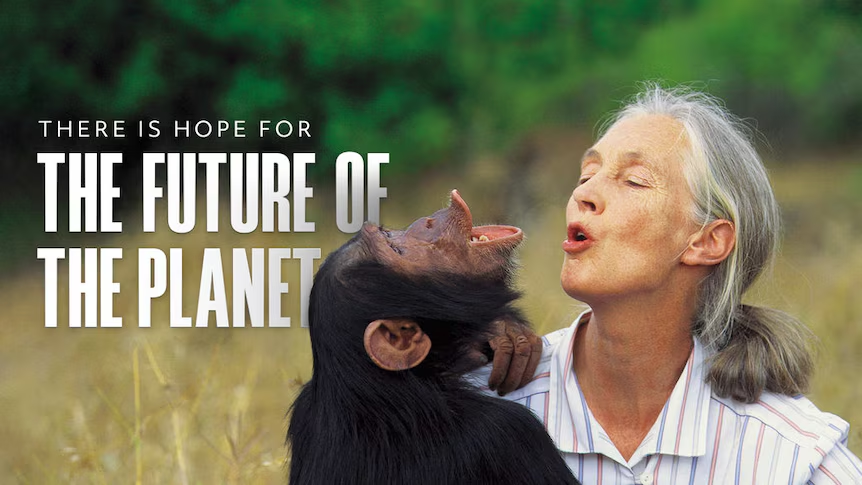
Yesterday, the world mourned the loss of a giant. Jane Goodall, whose storybook life began among the chimps of Tanzania and carried on as she became perhaps the strongest voice for the preservation of nature and the wildlife who inhabit it, died yesterday at the age of 91 of natural causes while on a speaking tour in California. Her life became known to many of us through her early monumental work after she was initially hired by Louis Leakey in 1960 to study the chimps of Gombe Stream with significant funding through the National Geographic Society, but it was her continued life-long passion as a conservationist that brought her to the world’s stage and known to millions of children worldwide through her Roots and Shoots program. Simply put, she was a giant among giants.


I had first become familiar with her through my love of the National Geographic Society as an adolescent, having visited the society’s headquarters in Washington, D.C., in 1969 with my brother, and found myself enthralled with the many explorers and expeditions that the NGS funded, among them the work at Gombe Stream. Her first book, My Friends, the Wild Chimpanzees, was published by the NGS in 1967, and a first edition of that book, has remained in my book collection for over fifty years. The premise for my first visit to Tanzania in 2009, along with my two children, Daniel and Anna, was, in fact, that Anna had an interest in working with animals and going to school for wildlife management (just as a side note, Anna is now a senior at UC Davis School of Veterinary Medicine and will be graduating in May).

Anna doing a elementary school assembly with animals from the Elmwood Park Zoo
Jane holding a bald eagle on her arm with Zoo Director, Bill Konstant

As part of that love, Anna had worked as a junior docent at the Elmwood Park Zoo, in nearby Norristown, while in high school, and during that time, we had the privilege to have met Jane Goodall, as she had come to the zoo for a Roots and Shoots activity. In addition to bringing my camera, I had given Anna my first edition copy of My Friends, the Wild Chimpanzees, to have Jane possibly sign it for her. We had a front row seat, actually standing to the side of Jane as she spoke to the gathering of children, and at one point, was presented with the zoo’s huge Bald Eagle, who had been rehabilitated after an injury and still remained at the zoo. Jane, who was fitted with a gauntlet, or raptor glove, to protect her arm from the eagle’s talons, held the bird, who seemed to be almost half her height, while I found myself to be the only one nearby with a good camera and began snapping photos. I gave them all to the director of the Zoo who was good friends with Jane, and thankfully, I was able to retrieve many of them from Kim, who keeps things orderly on her computer.

Jane at the Elmwood Park Zoo and her Roots and Shoots club kids

Anna (with book under her arm) and Jane at the Elmwood Park Zoo

The best moment, though, came as Jane was going to meet alone with all the junior docents, and as Anna, her book under her arm, was led to a conference room, I recall one of her support staff saying, “no book signings, please.” Jane immediately noticed the book Anna held, and quickly commented, “except this one.” What a moment. Though there were no parents in the meeting between the docents and Jane, I learned later that she happily signed the book to Anna and also had a few questions for her.


It was over ten years later, after having come and gone from Tanzania perhaps 18 times as part of my work with FAME, that I once again felt a similar connection with Jane Goodall and her life work when I traveled to Gombe Stream National Park to visit her chimps with two of my colleagues. Mike Baer, now a neuromuscular attending at Penn, Leah Zuroff, currently an MS fellow at UC San Francisco, and I had decided to spend several days at the Jane Goodall research facility which is the original site where she had spent those first years with the chimps virtually on her own. Much of the original structures, including her house, still exist at the site, though it is now the temporary home for many student researchers, guides, trackers, and rangers. It was a truly magical visit as many of the paths and trails we took in search of the chimps were those that had been used by Jane so many years ago, and many of the more important locations in the hills still have the names that she originally gave them attached. I recall one morning sitting on “Jane’s point” and looking out over the lush vegetation just as she must have done, listening for the sounds of the chimps echoing through the valleys below.


They were strenuous hikes for sure, as we had to travel far into the interior to find the chimps due to our visit during the dry season, but with the help of our guide, and the trackers who had been out in the pre-dawn hours, we were able to visit and follow several of these incredible families, some with babies, and all known by name for those who spend time with them. It’s hard to describe the sense one gets standing under a tree in which there may be a dozen chimps from one family, all interacting with such behavior that it would be clear to anyone observing that these beings are clearly our closest living relatives. As they decided to move on and climb down from their tree, they walked right past us, easily within a foot, and it only took one look into their eyes to realize just how human they are, or rather just how much we are like them. It would be impossible to have spent those days literally in the footsteps of such a giant without its having left a profound and lasting effect. As an added treat, we visited Jane’s home at Gombe Stream during our visit and met one of the researchers who had spent years with her including helping to arrange her travels in Tanzania. Sitting in her living room in one of the several armchairs that she had likely spent many evenings in previously, looking around at all the research material, it was impossible not to have imagined the incredible and important discussions that had occurred in this place over the years past. With a past of having worshiped explorers and anthropologists, my visit to Gombe Stream was, to say the least, deeply moving.

Sitting in the living room of Jane Goodall’s home


Meanwhile, it was time to get back to our current work – after nearly a month with not to many volunteers other than neurology here, we’ve had to come up with additional topics for our educational talks. As it seems that coming up with neurology pathways has been one of the themes of this fall’s visit, Leah, who just arrived several days ago, gave a talk this morning that presented an algorithm for when you should be considering an CT scan when evaluating a patient. Though this is an incredibly important topic at home as unnecessary imaging studies pose a huge burden on the cost of healthcare, it seems equally significant here as these studies are being performed as self-pay given the fact that the vast majority (essentially 100%) of our patients do not have national health insurance and are paying fee for service. The fact that we even have a CT scan available here at FAME is somewhat of a miracle, and though it has assisted in the diagnosis and treatment of a great number of patients that we see here, it has also created a great tendency to over rely on it which has to be avoided at all costs. We very rarely perform what I refer to in the US as “therapeutic scans,” that is to allay a patient’s underlying anxiety, here at FAME, and the likelihood of one of the CT scans here being abnormal is far greater than it is at home.

Leah presenting our proposed pathway for obtaining CT scans at FAME

Our patients today were quite diverse and ranged from catatonia or psychomotor slowing in a depressed person, to a young boy in status epilepticus, to a child who we had treated for infantile spasms and was now returning. Though the patient with severe psychomotor slowing that looked pretty much catatonia, wasn’t necessarily a neurologic patient, I’ve outlined in the past how we have become the de facto psychiatrists very often here. We evaluated the patient and based on their history, elected to start them on a benzodiazepine trial to break their catatonic state and also started fluoxetine, an SSRI medication for depression. We asked him to come back in several weeks to see if the benzodiazepines were helping as that is not a medication for them to stay on long term, as opposed to the fluoxetine.

Novati, Zuhura, Leah, and Dr. Ivone evaluating a patient
Novati, Zai, and Natalie evaluating a patient in clinic

The child with the history of infantile spasms when we had seen them three weeks ago, had been placed on high dose steroids which is the treatment for this condition, a most often devastating epileptic condition of infancy that leads to severe developmental delay in most of the cases regardless of whether treatment is initiated early or not. There is also a very specific EEG pattern that is seen in these children, called hypsarrhythmia, that consists of very high amplitude, severely disorganized and chaotic slow waves and spikes. The treatment with high dose steroids will very often cause resolution of the abnormal EEG, though not necessary arrest the process leading to developmental delay. When the child came to clinic, the family reported that their seizures, or spasms, had become much less frequent and there was some hope that the child would respond, though again, it was unclear what the long-term prognosis would be. We considered obtaining an EEG on the child, but unfortunately, the smallest Brain Capture electrode cap was too large for the child, so we would have to rely on clinical impressions.

Novati, Dr. Ivone, Natalie, Zai, and Leah evaluating a young child in clinic

Another interesting patient we were seeing for the first time was a young 14-month-old Massai girl whose mother brought her in as she seemed to have a right gaze preference that had started only one week prior. The child was otherwise entirely healthy with a perfectly normal neurologic examination except for her eye movement that revealed she had a left VIth cranial nerve palsy (meaning that she was unable to abduct her left eye or move it outward. As a result, she was turning her head to the right volitionally so that she wouldn’t see double. The VIth cranial nerve is unique as it has the longest intracranial course of any of the cranial nerves making it the most vulnerable to increased intracranial pressure or to trauma, though can also occur not uncommonly as a congenital abnormality, though mom was very certain that it had only began a week prior. The child had not suffered trauma and looked to perky and well to have increased ICP, so the other causes could include a mass lesion, again felt less likely in the absence of other neurologic deficits, or perhaps a viral event causing a parainfectious inflammation of the nerve. Our decision was to watch the child for now and have her return in two weeks to see if there was any improvement in her condition. Having only a CT scan, as opposed to an MRI, left us somewhat wanting as the former would be much less sensitive looking for a cause of the palsy if it was needed in the end.

Dr. Annie and Patrick evaluating a patient in clinic

We were just about to head home when we were consulted from the emergency room for a six-year-old boy who had been having seizures since July that had been infrequent but was now presenting with multiple seizures over several days without complete return to normal that was consistent with status epilepticus. We loaded the child on sodium valproate, orally as we have no IV formulation here, and felt comfortable that would very likely control his seizures quickly, which it did as he hadn’t seized again by the following morning, and was discharged home on a good standing dose of the medication to prevent further seizures. There were no other features that raised concern that would have required further workup for the child.

Zuhura, Dr. Ivone, and Leah evaluating a patient in clinic

Once we made it home, it was a quiet night for the group. We were invited tomorrow night to Frank and Susan’s house for bites and sundowners along with the rest of the volunteers here at FAME.

Wednesday, October 1 – A long-term patient of mine and a visiting pediatrician…

Standard

Julius Nyerere – Baba wa taifa

Not only is this a presidential election year for Tanzania (once every five years here as opposed to our four), but the elections will be happening at the end of this month. There is always a significant amount of campaigning going on as there are many political parties in the country (this is anything but a two-party country), though a single party has been in power since its independence from the British Government in 1961. Julius Nyerere, who is revered throughout Tanzania, became the prime minister in 1961, and then president of Tanganyika in 1962. When Tanganyika and Zanzibar combined, he became president of the new United Republic of Tanzania and remained the head of office until 1985. His party, Chama Cha Mapinduzi, or CCM, has remained in power since independence despite robust challenges by several other strong opposing parties, as well as partnered opposition. The current president of the country, Samia Suluhu Hassan, or Mama Samia as she is known throughout the country, who took office in March 2021 with the death of John Magufuli for whom she was serving as vice-president, is also a member of CCM and is also originally from Zanzibar.

Zai, Dr. Annie, and Natalie evaluating a patient

Over the next several days, Mama Samia will be traveling through Karatu during her campaigning for the upcoming presidential election, so we are expecting a significant number of political rallies to be occurring, both for CCM as well as their opposition. Though these rallies are for the most part peaceful, we are always advised to steer clear of them for many reasons, but the most significant being our safety. International SOS, an organization providing global logistical and medical assistance to academic institutions and others, and who we are covered through the University of Pennsylvania, is constantly sending us notices regarding the changing political and medical landscape for those regions we’re traveling in. When there are reports of Ebola in the DRC (which borders Tanzania along Lake Tanganyika), we hear about it. Likewise, when there are safety concerns for us regarding large political rallies or demonstrations, we receive notices to avoid these at all costs. During these days, we’ll remain at FAME and hold off from going into town or doing any of the other activities we often do here.

Dorothea, me, and her mother

A long-term patient of mine came to clinic today in follow up. I have been following Dorothea since at least 2013, when she first presented to neurology as a 10-year-old adolescent with a spastic right hemiparesis since birth and a long history of focal onset seizures that had failed to be completely controlled with the any of the medications that had been tried in the past. As a result of her continued seizures, she hadn’t been allowed to remain in school, which is pretty much a standard policy here, and any hope for her to learn a vocation or to possibly continue on into second school had been pretty much dashed at that point. As is very often the case here in Tanzania, even when an attempt is made to treat epilepsy and multiple anti-seizure medications are trialed, they are used at very low (subtherapeutic) doses and the patient is never maximized on a single medication to determine whether the medication will work at the higher doses that are often necessary to control their seizures.

Such was the case with Dorothea, and the carbamazepine dose that she was on when I first saw her was far too low to hope for control of her seizures despite it being an excellent choice control her seizures given that they were likely of focal onset. We were able to quickly control her seizures by increasing her dose which she tolerated well, and she was able to go back to school where she excelled, eventually finishing primary school and going on to Secondary after passing her exams. Though we did try to switch her to lamotrigine at one point given the fact she is a young woman (childbearing age), though she didn’t tolerate the medication, and she was eventually switched back to carbamazepine which has been working well for her. During today’s visit, though, she did report some brief lapses during the daytime that were concerning for small focal seizures, so her medication was increased slightly, and we’ll monitor her going forward. Carbamazepine is an older medication that works well for seizures, though does have other concerns for long-term use such as osteoporosis, which the newer medications have much less so. We’ve counseled her on taking calcium supplements along with her folic acid, something that is used in all women of childbearing age with epilepsy. I’ve included a nice informational video about our FAME Neurology Clinic in which Dorothea and her mother participated

Dr. Ivone, Zuhura, Novati, and Leah evaluating two sisters

Meanwhile, Leah evaluated two sisters, age 6 and 9, who were being seen for the first time by us, and each of them had progressive neurologic dysfunction that could best be characterized by difficulty with gait, cerebellar dysfunction, and hyperreflexia. The two girls’ exams were subtly different, though it would be most likely that we’re dealing with the same condition with subtly different phenotype (neurologic deficits) and was very likely genetic in nature. The girls have three healthy brothers with no similar symptoms whatsoever, though also have a young newborn sister who has yet to demonstrate any similar symptoms.

Zai, Dr. Annie, and Natalie evaluating a baby

Unfortunately, we have no access to genetic testing here at FAME, or anywhere in Tanzania for that matter, which means that we may never know the full story. Though doing CT scans on the girls would not likely lead to any treatment options, it might be helpful in looking for some characteristics that could be helpful to a discerning a diagnosis. We made certain to point all of this out to their parents as the last thing we wanted would have been for them to have had any expectation otherwise, but we also didn’t want to invalidate their concerns. The parents ended up wanting to proceed with the CT scans on each girl, and though there were no obvious abnormalities, they each seemed to have some degree of cerebellar and brainstem atrophy that was convincing enough for us to be concerned and would have explained the neurologic findings that we saw.


Another pleasant surprise for today was that we had a guest from Dar es Salaam and CCBRT Hospital arrive would be spending time with our clinic over the next several weeks. Ivone Mwakasege is a pediatrician who is currently working at CCBRT and whose husband is a pharmacist who spent several weeks at Penn this summer as a global scholar through the Center for Global Health. I had met with him given our common interest regarding Tanzania, and it was then that he informed me that his wife was working at CCBRT and would be very interested in coming to Karatu and joining our neurology clinic for several weeks. I invited Ivone to come join us for the second three weeks of our visit as that would allow her to work with both Leah and Natalie and perhaps see more pediatrics. We’re certainly looking forward to having Ivone work with us given her interests in pediatrics and neurology and the possibility of future collaborations with FAME. It was serendipitous to have met her husband, Nelson, over the summer, but that’s often how things happen in life and is certainly how so much is accomplished in Africa.

Leah enjoying life

It was a quiet evening for us at home and both Natalie and I had separate Penn conferences to attend on Zoom from 7-8 pm. Her’s was a weekly stroke conference and mine was our monthly neurology M&M conference which I had described previously. We ate dinner a bit late after the conferences and then Leah worked on her presentation for the next morning.

Tuesday, September 30 – A visit to town in the afternoon, followed by a visit to the ED….

Standard
Natalie’s talk on intracranial hemorrhage is well attended

This morning, Natalie gave a wonderful talk to the FAME clinical staff on Intracranial Hemorrhage that included both treatment recommendations as well as cases with CT scans. Trauma cases have increased exponentially since the opening of FAME’s new emergency room, and the number of head injuries from high speed boda boda and car accidents are being brought in every night. Thankfully, the FAME staff are now perfectly comfortable routinely performing burr holes for subdural hematomas that has become lifesaving as these patients were previously sent to Arusha or KCMC, several hours away each, often decompensating or dying in transport or on arrival. After several years of trying to make it happen, in the fall of 2021, Sean Grady, chairman of neurosurgery at Penn at the time and a long-time colleague, finally made it to FAME specifically to teach the surgeons how to do burr holes. Sean was also accompanied by Kerry Vaughn, also a neurosurgeon who had been at Penn for training and had subsequently done a pediatric neurosurgery fellowship, to help out with the training. We had brought two manual burr hole drills, or braces, with their bits, and Sean had set up the trays and instructed the OR nurses on their use. It was a slow startup, to be honest, but once Dr. Manjira had come to lead the surgical program here, everything took off, and these lifesaving procedures are now performed on a regular basis.

A manual cranium drill, or brace, with bits
Leah and Zuhura evaluating a patient

Anything more complicated from an intracranial or neurosurgical standpoint that arrives here at FAME must be transferred to KCMC to see Dr. Happiness Rabiel, a neurosurgically trained clinician who is currently the only acting neurosurgeon in Northern Tanzania, though Kerry Vaughn had worked there at KCMC with Happiness for an additional year as a global neurosurgical fellow following her time at FAME. The ability to perform more intricate neurosurgical procedures that require specialized operating room setups must be done in Dar es Salaam if they can be done in Tanzania at all. These highly specialized procedures are either completely unavailable to patients, or they must travel out of the country to places like Nairobi, South Africa, or even India if they’re to receive this care and can afford both the travel and the hospital fees that would be required.

Zuhura, Patrick, Annie, and Leah during some downtime

Independent of whether or not a trauma patient requires a burr hole for a subdural or a referral to KCMC for something not treatable here, the presence of a fully equipped and fully staffed emergency room has been a game changer for the Karatu community and for FAME. Coupled with the opening of our emergency room, FAME and the Karatu community greatly benefited from the good fortune of having Dr. Amanda, our Australian emergency room doctor extraordinaire, who spent two years here at FAME training the ED staff and developing virtually every ER protocol one could imagine to care for our patient population. Her departure this last July to return home with her pediatrician husband, Peter, and her two children, was bittersweet, though lessened by the incredible work she had accomplished during her time here and the fact that she was leaving our ED in such great shape for the coming years.

The neuro team during the daytime evaluating a patient

To put things into perspective for everyone at home as to how emergency services are provided here, you have to first understand that there is no “911” service or emergency medical squads to show up at the scene of an accident. Victims of an MVA (motor vehicle accident) are almost 100% reliant on good Samaritans to assist them at the scene and to then transport them to a medical facility for assessment and treatment. This is not to say that there are no ambulances here, but rather that ambulances are not for bringing patients to the hospital, but rather they are for transporting patients between hospitals once they’ve been assessed at the ED and are then being referred to another institution for further treatment. Ambulances are privately owned here (FAME has one newer ambulance as well as a few older ones) and payment is typically arranged in advance for these services.

Leah examining a little child
Novati, Zai, and Natalie evaluating a patient
CT of patient with hydrocephalus and incidental choroid fissure cyst (arrow)

In the ward, there was a 4-year-old boy who had presented several days prior with concern for meningitis who wasn’t improving, and a CT scan of the brain was obtained as we had wanted him to have an LP. The scan was interested as it showed hydrocephalus as well as a well circumscribed cyst that to my looked very benign and I felt most likely represented an incidental (unrelated) choroid fissure cyst. Despite his hydrocephalus, though, his fourth ventricle and basal cisterns were wide open so it would not present an issue for him to undergo an LP, though he had been on antibiotics for several days which would certainly affect the CSF results. Hopefully, we’ll be able to add something to his management as he wasn’t doing very well neurologically.

Dr. Annie examining a patient with Patrick looking on
Annie greeting Saidi’s wife, Ummy, and holding his new son, Kaisan

We finished in clinic at a reasonable time and had decided we would take a drive into town to pick up some groceries for the house as we had forgotten to order more corn flakes (a staple for Leah and me) and needed some additional eggs just in case Natalie got the energy to make stovetop banana bread as some of our bananas were getting long in the tooth. Just before we were to leave, Susan stopped in the house to let us know that there had been another accident in the conservation area and the victims were being brought to FAME, but it would be some time prior to their arrival. That worked fine for us as we wouldn’t be in town long, though on our way to town, we passed an ambulance with its lights on that was likely carrying someone heading to our ED. Since it would take some time for them to make their initial assessments and given that neurologists aren’t great as the initial evaluator in trauma cases, we continued to town.

Adjacent to the vegetable market

It was evening time, and the sun was just setting, but the central part of Karatu was completely a buzz with activity as it seemed everyone in town was out shopping and taking care of business. We first went to the “supermarket” that I have used for the last 15 years – Deus Market – as they always seem to have everything, and if they don’t have it on the shelf, they’ll send someone to find it for you and bring it back. We picked up our corn flakes, our eggs, a bottle of delicious looking habanero hot sauce, and a large bar of Cadbury chocolate. The next stop was the vegetable market – this is a very large, now with a roof though only over the last several years, building the size of a Karatu square block, that has probably 100 stalls or more of produce with each stalls displaying virtually the same items for sale. Every type of vegetable and fruit that one can image as well as grains, fish, some kitchen wares, and much more. I had wanted to get several kilos of dry beans to use for a second bean bag that I had brought for our safaris – they are used to stabilize the camera and long lens acting as a tripod on the side of the vehicle. I bought the beans for 3000 shillings per kilo (a little over $1 per kilo), though was concerned I had paid too much (Mzungu price), but was relieved after calling Saidi to ask the price which turned out to be spot on, so I felt better. Leah was buying bananas for the house, but the first stall she checked, they wanted much more than the 200 shillings per banana that Saidi had suggested, so she passed and quickly found the right price at the very next stall.

The Karatu vegetable market

Sunset from town

Completely set with our groceries and my beans, we decided to take a leisurely walk around the shopping district before heading home as we hadn’t yet heard from the ED about the possible patient for us to see. That call came while on the FAME road driving home, so we stopped at the house to get our tools and headed up to the ED. It turned out to be a single patient who had been in a safari vehicle that hit a large hole in the road during poor visibility from the excessive dust, launching the entire vehicle and the couple into the air, and losing the entire rear axle upon their landing. Surprisingly, no one had suffered a head injury or been thrown from the vehicle, but our patient did have severe back pain and weakness of one of their legs. We did a CT scan that demonstrated an incomplete burst fracture of the L1 vertebrae, thankfully without any projection into the spinal canal, and very likely not the cause of the leg weakness as that was from a different level completely. We recommended bed rest overnight as the fracture was stable and would not require surgery, though they would have to travel back to Arusha in the morning and then home after several days as they could not possibly continue on their safari. Having the ability to rapidly assess patients for more serious injuries in these situations is certainly and essential service that FAME offers and there are many that are quite thankful for that.

CT of patient with L1 burst fracture